 Skip to content
The Definitive Guide to Thai Massage: The Art of Passive Yoga and Energy Healing
What is a Thai Massage?
A Thai Massage, known in its homeland as Nuad Thai, is a centuries-old therapeutic practice that differs fundamentally from Western massage styles. While most massages involve the therapist rubbing oil into the skin, Thai massage is a more active, rhythmic process that combines acupressure, assisted yoga postures, and deep stretching. It is often described as “lazy man’s yoga” because the recipient remains passive while the therapist moves their body into various stretches.
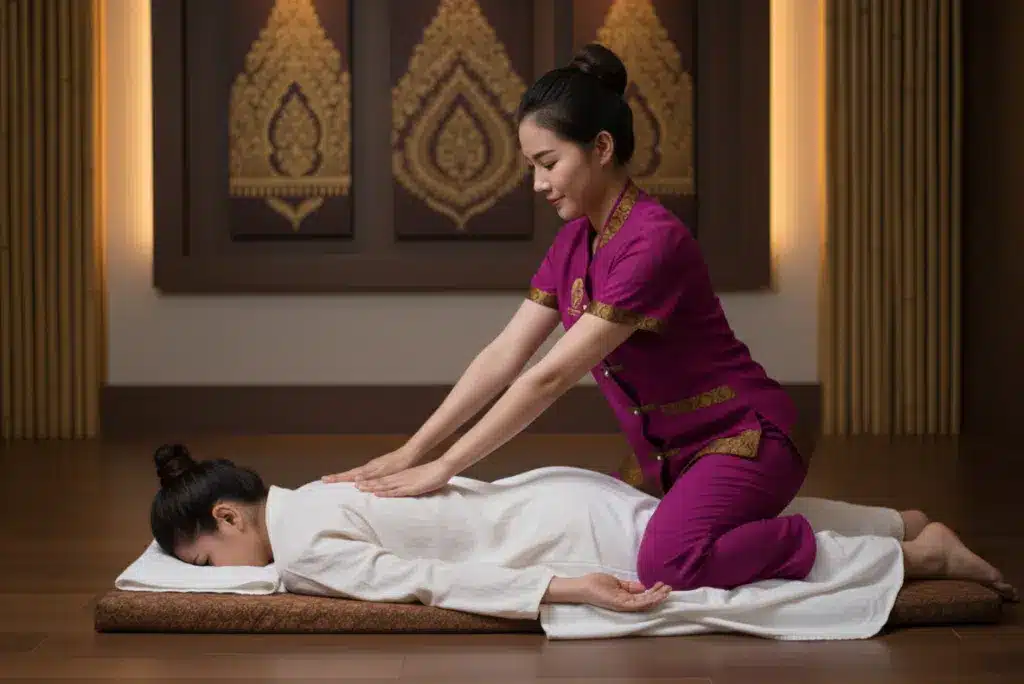
The core philosophy of Thai Massage is based on the concept of Sen Lines. According to traditional Thai medicine, these are energy channels that carry Prana (vital life force) throughout the body. When these lines become blocked due to stress, injury, or poor posture, it results in physical pain and emotional imbalance. By applying targeted pressure along these lines, the therapist removes blockages and restores the free flow of energy, leading to a state of holistic equilibrium.
From a physiological perspective, this modality is a powerhouse for joint mobility and muscular flexibility. By integrating elements of manual therapy (which is a widely recognized medical approach to soft tissue treatment), Thai massage helps in elongating the muscles and increasing the range of motion in the joints. This process stimulates the circulatory system and lymphatic flow, which helps in detoxifying the body and reducing inflammation.
Psychologically, the rhythmic nature of the movements and the deep stretches trigger the release of endorphins and serotonin. The deep stretching acts as a form of meditation, calming the nervous system and reducing the symptoms of chronic stress and anxiety. This makes Thai Massage a complete treatment for both the physical body and the mental spirit.
How is a Thai Massage Done?
The execution of a Thai Massage is a highly disciplined art. Unlike other styles, it is traditionally performed on a firm mat on the floor, though it can be adapted for a professional massage table. The client remains fully clothed in loose, comfortable attire, as there is no oil used in the traditional sense.
The Preparation and Ritual
The session begins with a focus on mindfulness. The therapist often starts with a series of gentle presses on the feet and legs to ground the client and prepare the body for the stretching to follow. The environment is kept calm, often with the scent of lemongrass or jasmine to enhance the sensory experience and signal to the brain that it is time to enter a state of deep relaxation.
Core Technical Applications
A professional therapist uses their entire body as a tool—including their hands, elbows, knees, and feet—to apply pressure and create leverage. The primary techniques include:
- Rhythmic Compression: The therapist uses their palms or thumbs to apply firm, rhythmic pressure along the Sen Lines. This “pumping” action helps to move blood and lymph through the body.
- Assisted Stretching: This is the hallmark of Thai massage. The therapist gently pulls, pushes, and twists the client’s body into yoga-like positions. This targets the deep fascia and muscles, releasing tension that a standard massage cannot reach.
- Joint Mobilization: Through careful manipulation, the therapist works on the shoulders, hips, and ankles to increase flexibility and reduce stiffness.
- Rocking Movements: The therapist uses a gentle rocking motion to soothe the peripheral nervous system and synchronize the client’s breathing with the movement.
The Systemic Sequence
The massage follows a logical flow, typically starting from the feet and moving upward toward the head. This sequence is designed to push energy and blood toward the heart.
The Lower Body: The session begins with the legs and feet, focusing on the calves and thighs to release tension from walking and standing. The Torso: The therapist then works on the abdomen and lower back, using compression to improve digestive function and relieve lower back pain. The Upper Body: The focus shifts to the shoulders, arms, and neck, which are common areas for psychosomatic tension. The Final Release: The session concludes with a series of gentle stretches for the neck and a soothing massage of the scalp and face, leaving the client in a state of total revitalization.
Who Can Get a Thai Massage?
Thai Massage is an excellent choice for anyone who feels “stiff” or “blocked” in their body, but it is particularly beneficial for specific groups:
Athletes and Fitness Enthusiasts: Those who engage in intense physical activity benefit from the deep stretching, which improves recovery times and prevents muscle strains.
Office Workers: People who spend hours sitting in front of a computer often suffer from “tech neck” and tight hips. The assisted stretching of Thai massage is the perfect antidote to sedentary lifestyles.
Individuals with Chronic Stiffness: Those who struggle with limited joint mobility or general muscle tightness find that the passive yoga aspect of this massage restores their range of motion.
Stressed Professionals: The combination of acupressure and rhythmic movement helps to lower cortisol levels and clear mental fog.
Where Can I Get a Thai Massage?
To experience the true benefits of Thai Massage, you need a therapist who is trained in the precise art of assisted stretching and energy line manipulation. While traditional spas are an option, the most convenient and luxurious way to receive this therapy is through a professional in-room service.
For those staying in Istanbul and seeking an authentic, high-quality experience, Istanbul Hotel Massage provides a premier Thai Massage service delivered directly to your hotel room. By choosing a certified Thai therapist, you ensure that the stretches are performed safely and effectively. Receiving this treatment in the privacy of your own room allows you to remain in a state of deep recovery without the stress of navigating city traffic, making it the perfect addition to a luxury stay in Istanbul.
View our professional massage therapists.
