 Skip to content
Most advice about Russian massage technique gets one thing wrong. It treats the modality like it's supposed to feel brutal, when the more accurate picture is a structured, paced manual therapy built on heat, rhythm, and controlled depth. In practice, the difference between a good session and a disappointing one usually comes down to sequence, pressure control, and whether the therapist understands the line between firm and painful.
For travelers, that distinction matters. If you book expecting a rough sports beating, you may misread the method entirely. If you book expecting a soft relaxation massage, you may be surprised by the intent of the work, which is to warm tissue, address tension, and progress step by step rather than rush straight into heavy pressure. For a related concept in recovery support, the discussion around how N-Acetyl L-Tyrosine dissolves is a reminder that technique and form matter in bodywork and in supplements alike, because how something is delivered changes how it's experienced.
Table of Contents
- What Russian Massage Technique Actually Means
- Historical Roots from Folk Healing to Sports Medicine
- The Stroke Sequence and How Pressure Builds
- Russian Massage Compared to Swedish and Thai Modalities
- What to Expect During an In-Room Hotel Session
- Who Benefits Most and Who Should Choose Alternatives
What Russian Massage Technique Actually Means
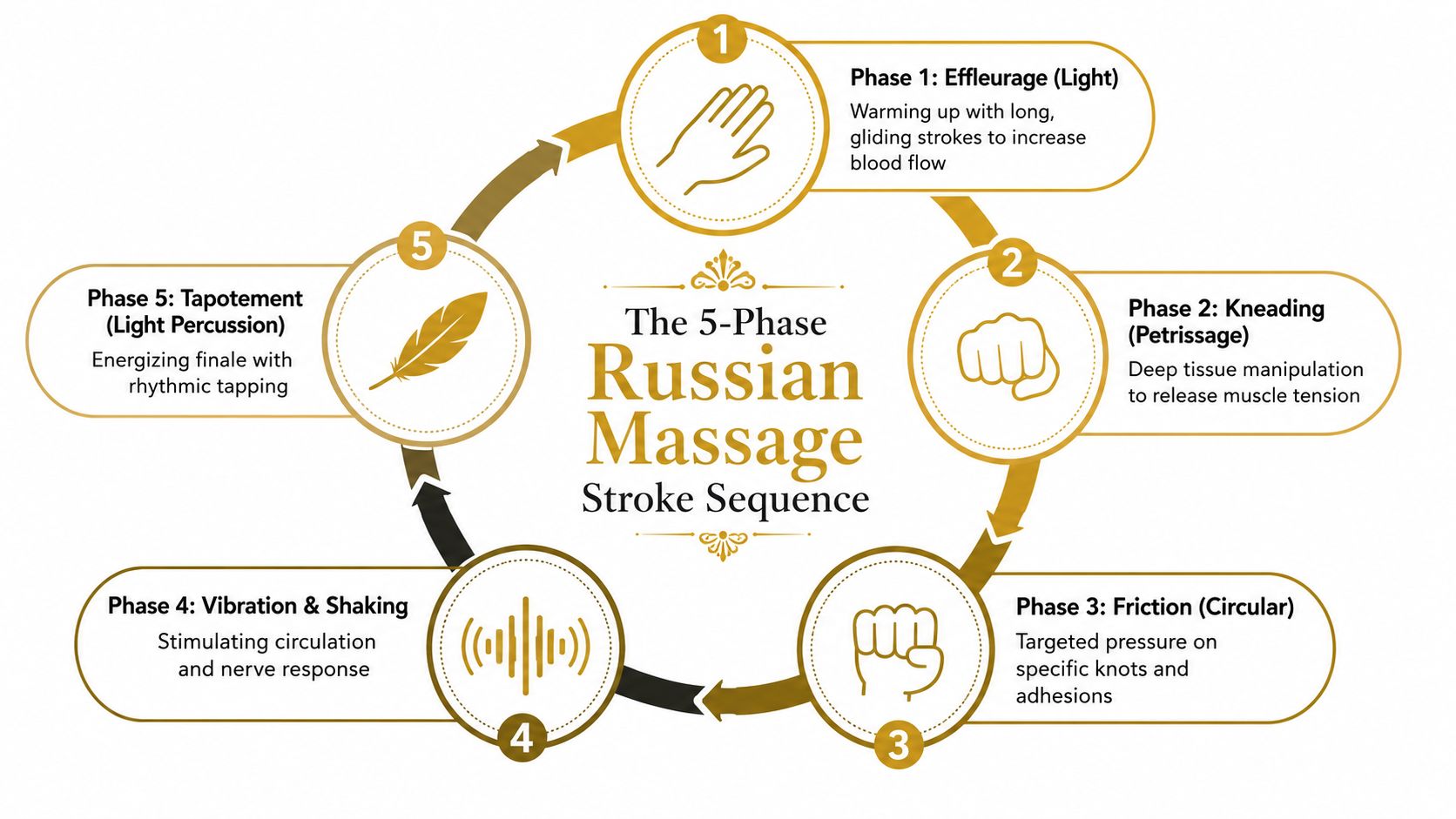
The biggest misunderstanding is that Russian massage technique just means “hard massage.” It doesn't. In the professional sense, it's a structured Soviet sports-massage system that uses a deliberate sequence of strokes, usually moving from light effleurage into petrissage, friction, vibration, and percussion. The point is not to overwhelm tissue. The point is to prepare tissue, then work it in stages.
The name gets used loosely
In hotel menus and spa listings, the same phrase can point to very different things. Some providers mean the sports-massage tradition, some use it to describe banya or venik-style branch work, and some are really selling generic deep-tissue pressure under a familiar label. That's why a traveler should always ask what the therapist does with pressure, oil, draping, and pacing before booking.
Practical rule: if the provider can't describe the stroke sequence in plain language, they probably mean “firm massage” rather than a true Russian method.
The method is often remembered as intense, but several technical descriptions emphasize that it can be slower and softer than typical sports massage, with a focus on friction-generated heat rather than brute force. That matters in a hotel room, where the right session should feel organized, not chaotic. You should feel the therapist building into the work, not attacking sore spots from minute one.
What to ask before you book
A simple checklist clears up most confusion:
- Ask which tradition they mean, sports massage, banya-style work, or a deep-tissue style.
- Ask how pressure is progressed, because the opening strokes should warm tissue first.
- Ask whether oil is used, since that changes the feel a lot.
- Ask whether stretching is included, because some providers mix modalities.
- Ask how feedback is handled, since pressure should be adjusted, not guessed.
That's the cleanest way to separate a real Russian massage technique session from vague marketing. The word can sound exotic, but the best sessions are practical, specific, and easy to explain before anyone starts working.
Historical Roots from Folk Healing to Sports Medicine
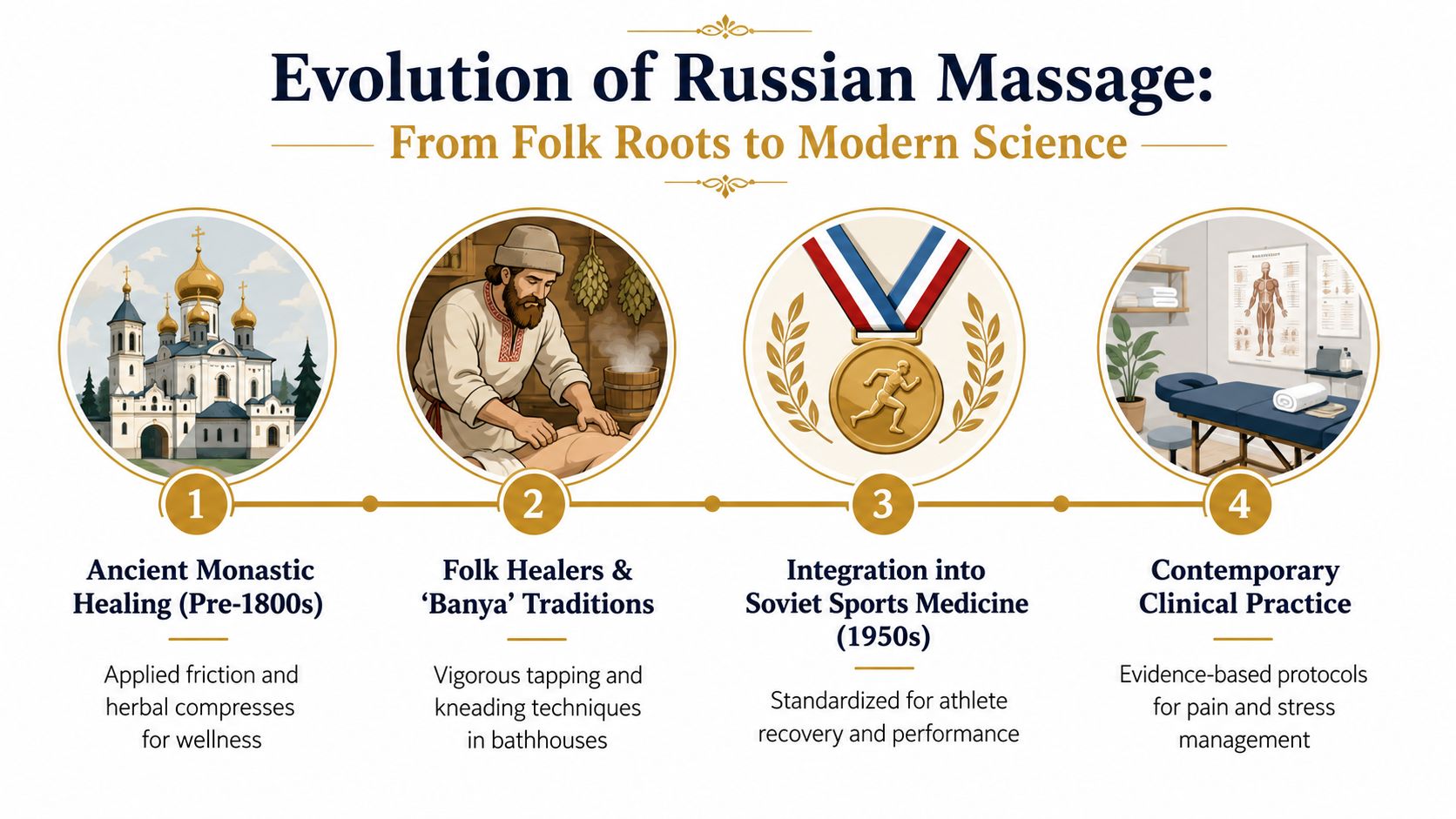
The modern version of Russian massage technique did not appear out of nowhere on a spa menu. It grew from older healing practices, then became organized over time. Historical accounts describe massage in Russia from ancient times through monks and folk healers, and by the end of the 18th century, doctors S.G. Zybelin and N.M. Abdomnik were already supporting massage in pediatric care. That early medical interest matters, because it shows massage was never only a folk ritual. It was moving toward clinical use long before modern wellness branding.
From systematization to scientific language
The major turning point came with Dr. I. Zabludovskiy. Between 1882 and 1913, he published more than 100 works on massage therapy, and his 1882 book, Materials to the question about effect of massage on healthy individuals, became a core reference for massage practitioners of the period (source). That milestone matters because it shows the method was being organized around indications and contraindications, not just passed along informally.
Once a technique is written down, tested, and argued over, therapists stop treating it as a single massage style and start treating it as a system. Russian massage later earned a reputation for being more technical and clinical than a generic relaxation service for that reason.
Why Soviet sports medicine changed the feel of the work
The next major shift came in the 1930s, when historical accounts say the clinical application of Soviet Medical and Sports Massage was developed by Professor Anatoli Sherbak and Dr. Serazini (source). After World War II, the approach expanded further as pharmaceuticals were in short supply and Soviet physiatrists researched natural healing methods. That context explains the method's long connection to recovery, manual therapy, and athlete care.
In the 1950s, German scientists Drs. Glezer and Dalicho expanded the work by creating detailed maps of reflex-zone abnormalities, as described in historical accounts from massage education sources (source). So when people describe Russian massage as “deep,” they are often compressing a bigger history into one shorthand. The fuller picture is that the technique evolved through medical thinking, sports recovery, and structured manual work, which is why it still feels more purposeful than purely decorative spa massage.
For readers comparing recovery-focused services, that history is one reason the method is often discussed alongside athletic work rather than only relaxation treatments. A useful reference point is broader sports recovery in Istanbul, where session goals often matter as much as the modality name.
The Stroke Sequence and How Pressure Builds
A proper session doesn't start strong. It starts light, then gets more specific as tissue warms and the client's tolerance becomes clearer. That's the core logic of Russian massage technique, and it's why the opening strokes should never be skipped.
The first two phases set the tone
Effleurage is the opening glide. The therapist uses long, light strokes to warm the surface, spread oil, and assess where the tissue feels guarded. Petrissage follows, which is the kneading phase. Here the therapist lifts, squeezes, and rolls muscle groups to work deeper without jumping straight into sharp pressure.
Those first two stages do a lot of quiet work. They help the therapist find adhesions, sense asymmetry, and avoid the common mistake of going too deep too fast. In a hotel room, clients often relax sooner when the therapist starts here, because the body gets a clear signal that the work is controlled.
The middle phases do the targeted work
Friction is narrower and more focused. It's used on specific tight points where heat and direct contact can help tissues loosen. Clients often notice the sensation becoming more intense here, but intensity still shouldn't mean pain.
Vibration comes next. The therapist uses quick, small movements or shaking to stimulate the nervous system and change how the muscle responds. That can feel unusual if you've never had it before, but it shouldn't feel jarring. Then comes tapotement, a light percussion phase that adds an energizing finish rather than brute force.
The best cue you can give is simple. Say what feels too soft, what feels too sharp, and where you want the therapist to stay longer.
How a therapist should manage pressure
Pressure in a good Russian session is earned, not forced. The therapist increases depth only after the tissue softens and the client confirms it feels workable. That's one reason the technique is often described as methodical rather than aggressive.
A few practical signs help clients judge the difference:
- Good pressure feels warm, busy, and specific.
- Too much pressure feels sharp, pinchy, or defensive.
- Rushed work skips the warm-up and goes straight to the knots.
- Skilled work keeps the stroke sequence intact and adjusts by feedback.
The sequence is what makes the method recognizable. Without it, you may just be getting a generic strong-pressure massage. With it, you get a paced technique that uses rhythm, heat, and layered depth to work the body instead of bulldozing it.
Russian Massage Compared to Swedish and Thai Modalities
Travelers often choose by name and end up disappointed because the names sound more alike than they are. Russian massage, Swedish massage, and Thai massage can all help with tension, but they're built on different mechanics, different clothing expectations, and different goals. If you want the right fit, compare them by how they feel, not by how exotic the label sounds.
What changes in practice
Russian massage usually sits between Swedish and Thai. It's more structured and firmer than Swedish, but it stays more oil-based and methodical than Thai, which often involves assisted stretching and work done fully clothed. Swedish massage leans toward flowing relaxation, while Thai massage leans toward mobility and compression through clothes.
The easiest way to think about it is this. Swedish is the softest entry point. Thai is the most movement-heavy. Russian is the one that tends to combine strong tactile work with a clear massage sequence.
| Criteria | Russian Massage | Swedish Massage | Thai Massage |
|---|---|---|---|
| Pressure | Firm, layered, adjustable | Light to moderate, generally gentler | Can be firm through compression, often with stretching |
| Pacing | Deliberate and progressive | Smooth and flowing | Rhythmic, with transitions into assisted movement |
| Oil use | Usually yes | Usually yes | Usually no, or much less than oil-based massage |
| Clothing | Typically draped, often with underwear | Draped, often partially undressed | Fully clothed, usually in loose clothing |
| Main goal | Recovery, tissue work, tension release | Relaxation and general ease | Mobility, stretching, and body opening |
How to choose the right one
If you want a hotel-room session after a long flight, Swedish is usually the least demanding choice. If you want your body opened up with stretching and don't mind being dressed, Thai is the better fit. If you want firmer muscle work without losing the logic of a massage sequence, Russian is often the more balanced option.
For travelers comparing options in the city, the practical difference becomes clearer when looking at authentic Thai massage practice in Istanbul versus a Russian-style session. One is about guided movement, the other is about building manual pressure in phases.
What to Expect During an In-Room Hotel Session
A hotel-room session should feel organized from the first message. You usually confirm the booking, share the room number, and get a therapist who arrives with a portable table, fresh linens, oil, and the basics needed to work cleanly and privately. If the provider is professional, the setup is fast and calm, not noisy or improvisational.

What the client usually experiences
You'll typically wear underwear, then get draped so only the area being worked on is exposed. Oil is usually used, which is one of the clear differences from Thai massage. The therapist should ask about pressure, injury history, and any spots to avoid before starting, then check in again once the deeper work begins.
The pacing matters in a hotel room because the setting is already intimate and unfamiliar for many travelers. A good therapist keeps the tone professional, explains what they're doing, and doesn't assume more pressure is automatically better. If something feels too intense, you should say so immediately. The session works best when feedback is direct.
Booking and communication basics
A clean booking flow cuts out most anxiety. A concise hotel guide such as the contactless guest guide for hotels can help explain how in-room services are handled in a modern hospitality setting, especially when you're coordinating timing, privacy, and entry.
Session length is usually the other question people ask early. In practice, the right choice depends on how much of the body you want addressed and how much time you want for the therapist to progress through the stroke sequence without rushing. If you want a broader setup and a less compressed experience, give the therapist enough room to work gradually.
A useful travel-specific reference is how to bring the spa experience to your hotel room in Istanbul, because the logistics shape the experience almost as much as the technique itself.
A good in-room session feels private, predictable, and easy to stop or adjust. Anything else deserves a question before the therapist continues.
Who Benefits Most and Who Should Choose Alternatives
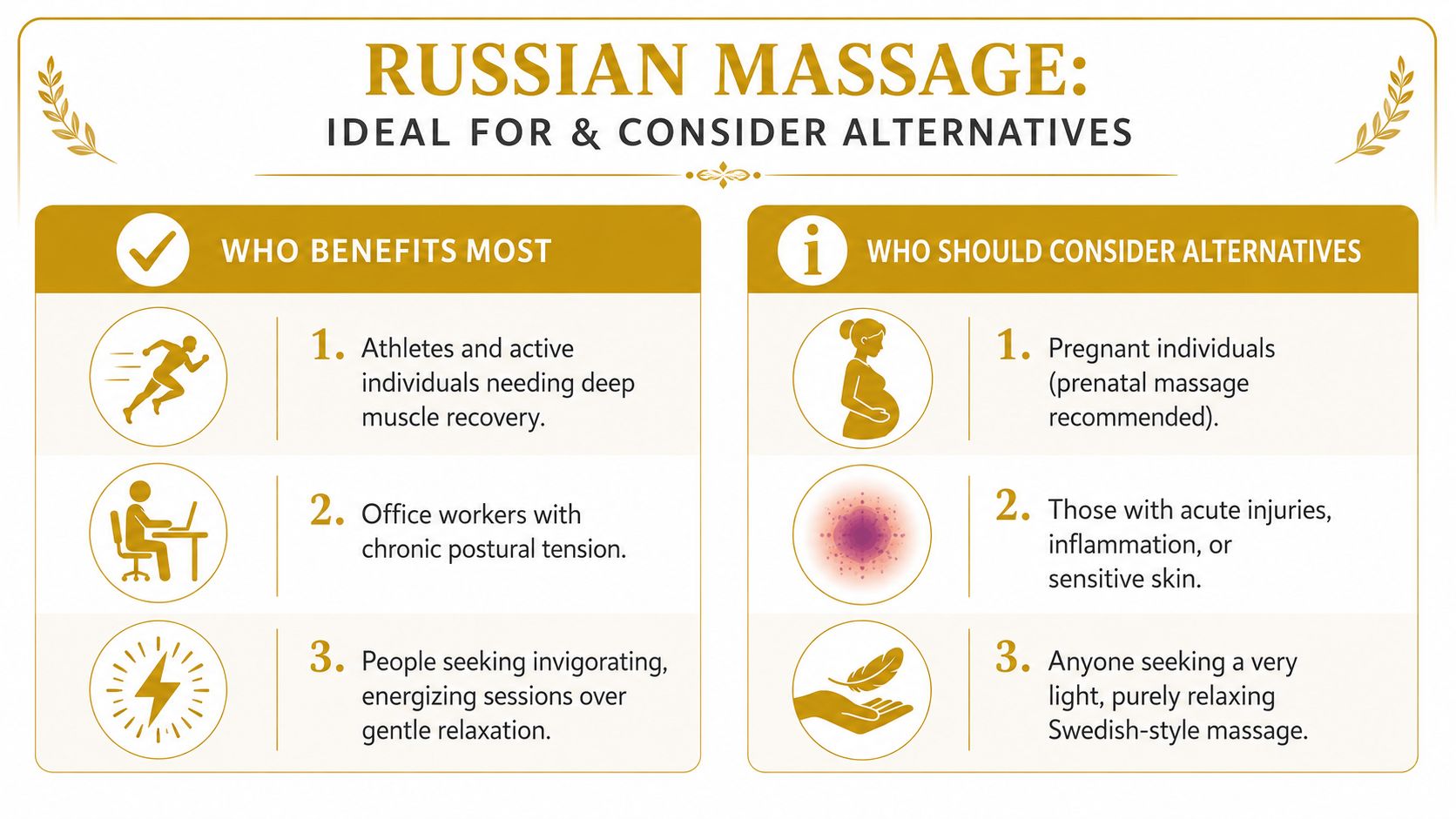
Russian massage works best for people who want structured, firmer bodywork rather than a purely calming experience. Athletes and active travelers often like it because the sequence can address tight, worked muscles without turning the whole session into a stretching routine. Office workers with chronic postural tension often appreciate the same thing, especially when they want a therapist to spend real time on dense upper-back or hip areas.
Best fit and red flags
The technique is not a universal choice. If you have acute injuries, active inflammation, certain circulatory conditions, recent surgery, or pregnancy without prenatal modification, you should choose something gentler or ask for a different protocol. Skin that's very sensitive, bruised, or easily aggravated also deserves caution.
Practical rule: if you're hoping the therapist will “work through” sharp pain, you're probably choosing the wrong modality.
For people who want calm over stimulation, Swedish massage is usually the safer bet. If circulation support matters more than depth, hot stone work can be a better match because it leans on heat instead of strong manual pressure. The right choice depends on what your body can tolerate, not on which style sounds most intense.
A simple decision guide
- Choose Russian massage if you want firm, methodical muscle work.
- Choose Swedish massage if you want relaxation and lighter touch.
- Choose an alternative if you're healing, pregnant, or unusually sensitive that day.
- Ask for modification if you like the style but need less pressure or shorter work on certain areas.
The best outcome comes from matching the method to the body in front of the therapist, not to a menu description. That's especially true in hotel settings, where the goal is comfort, safety, and a session that leaves you feeling better, not just treated harder.
If you want a hotel-room session that respects pressure, pacing, and privacy, Relax Massage Istanbul offers the kind of in-room coordination that makes that possible. Their licensed therapists work across central Istanbul, so you can request a Russian-style session with clearer expectations and less guesswork.
Built with Outrank app
